
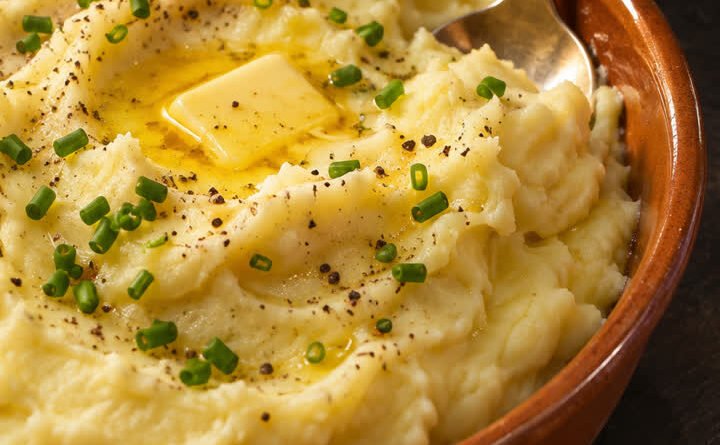
Stop boiling your potatoes in plain water. Milk-simmered mashed potatoes cook right in seasoned milk with garlic and butter, so every bit of flavor stays in the pot instead of going down the drain. The result is the silkiest, richest mash you have ever made, with almost no extra work.
Recipe tested and adapted by the WebViral8 kitchen team.
Prep: 10 min | Cook: 25 min | Serves: 6 to 8
Why You’ll Love Milk-Simmered Mashed Potatoes
- More flavor: the potatoes absorb garlic, salt and dairy as they cook.
- Extra creamy: starchy cooking milk becomes part of the mash.
- One pot: no draining, no colander, fewer dishes.
- Holiday worthy: perfect with turkey, gravy and all the sides.
Why Cooking in Milk Works
When potatoes boil in water, they soak up water and lose flavor. Cooking them in milk means they absorb milk instead. The starch that leaches out thickens the milk into a natural cream sauce. When you mash, that starchy milk goes right back in, so you get a smooth, velvety texture without a mountain of cream.
Ingredients
- 3 pounds Yukon Gold potatoes, peeled and cut into 1 1/2-inch chunks
- 3 1/2 to 4 cups whole milk (enough to just cover)
- 4 garlic cloves, smashed
- 1 bay leaf (optional)
- 1 1/2 teaspoons salt, plus more to taste
- 6 tablespoons butter
- 1/2 teaspoon black pepper
- 2 tablespoons chopped chives
Ingredient Notes
- Yukon Golds: naturally buttery and creamy. Russets work for a fluffier mash.
- Whole milk: gives the best body. Avoid skim, which can scorch and taste thin.
- Garlic: it softens in the milk and mashes right in.
How to Make Milk-Simmered Mashed Potatoes
- Combine. Put the potatoes, garlic, bay leaf and salt in a heavy pot. Pour in milk until the potatoes are just covered.
- Simmer gently. Bring to a gentle simmer over medium heat. Do not let it boil hard. Lower the heat and simmer 18 to 22 minutes, stirring the bottom now and then, until the potatoes are very tender.
- Reserve milk. Remove the bay leaf. Ladle out about 1 cup of the cooking milk and set aside.
- Mash. Add the butter and mash right in the pot. Add reserved milk a little at a time until creamy.
- Season and serve. Stir in pepper and taste for salt. Top with a pat of butter, chives and black pepper.
Tips for the Best Results
- Keep the heat low. Milk can scorch and boil over. A gentle bubble is all you need.
- Use a heavy pot. A Dutch oven spreads heat evenly and helps prevent sticking.
- Stir the bottom. Scrape the bottom every few minutes so nothing sticks.
- Mash, don’t blend. A blender or food processor makes potatoes gluey.
Common Mistakes and How to Fix Them
- Milk boiled over: lower the heat and use a bigger pot next time.
- Scorched bottom: do not scrape it up. Spoon the potatoes into a clean pot and mash there.
- Too thick: stir in more warm reserved milk.
- Too thin: cook uncovered over low heat, stirring, for a few minutes.
Easy Variations
- Loaded: fold in bacon, cheddar and sour cream.
- Garlic parmesan: add 1/2 cup grated Parmesan, inspired by our garlic parmesan smashed potatoes.
- Cream cheese: add 4 oz cream cheese for an even richer mash.
- Herb: simmer with a sprig of thyme or rosemary.
Make-Ahead Timeline
- Up to 2 days before: make the potatoes, cool and refrigerate.
- Before serving: warm in a slow cooker on low 2 to 3 hours, or in a covered dish at 350°F for 30 minutes. Stir in warm milk to loosen.
What to Serve With Them
Serve with turkey and gravy, smothered onion chicken or smothered hamburger steak. Leftovers make great cheesy mashed potato puffs.
Storage
Refrigerate covered up to 4 days. Freeze in portions up to 2 months. Reheat with a splash of milk and a little butter.
FAQ
Can I use the leftover cooking milk?
Yes. It is full of flavor. Use it to thin the mash, or stir it into soups and gravy.
Can I use half-and-half?
Yes. Mix half-and-half with milk for an extra-rich version, but watch the heat closely.
Can I use dairy-free milk?
Unsweetened oat milk works best. Use plant-based butter too.
Should I peel the potatoes?
For the smoothest texture, yes. Thin-skinned Yukon Golds can be left unpeeled for a rustic mash.


No Responses Yet